Ten ways to study the same topic, connected in one place.
Every topic has its own study space.
They are not scattered resources. Everything is linked to the same topic so you can study, understand, review, practise and check what you know without leaving the Campus.
Social Psychology · Topic 04
Social influence processes
Hover over each card to look insideCompleted
Hover over each card to look inside
Content
Study the full topic.
The full syllabus, your way.
The whole topic written out to study. Highlight in your colours and pick the font that works for you.
Summary
Keep the essentials.
The essentials, already extracted.
Keep the key ideas without spending hours summarising.
Outlines & infographics
Order the ideas and grasp the topic at a glance.
Get it at a glance.
The topic's ideas, laid out in visual outlines.
Slides
Learn the content visually, step by step.
Like a good lecture.
The topic moves slide by slide, at your pace.
Concept map
Connect the concepts.
Everything connected.
See how each concept relates to the rest.
Podcast
Review even when you're away from a screen.
Study without a screen.
Review the topic on the bus, on a walk or before bed.
Flashcards
Practise and lock in the key concepts.
Memory that lasts.
Active recall of the key concepts, card by card.
Brainy
Ask, go deeper and solve your doubts.
Your question, answered now.
Ask Brainy about the topic and it explains it another way.
Quizzes
Check whether you've really learned the topic.
Did you really get it?
Topic questions with instant feedback.
Exams
Test yourself before facing the real exam.
Walk in prepared.
Take the subject exam and find out what to reinforce.
Resources you'll want to open.
Every topic comes with materials built to understand it, not to fill space. These aren't screenshots: touch them, they're interactive.
The whole topic in one image.
The key ideas, authors and experiments, laid out so you get them at a glance.
Key ideas with their definition
Authors and experiments summarised
Topic timeline
Hover over each block
Example · Social Psychology · Topic 04
Infografía
Social influence processes
How the group changes what we think and do
Conformity
Adjusting behaviour or opinion to the group norm.
Author
Solomon Asch
Study
Line experiment
Key
Group pressure
Obedience
Following an order from an authority figure.
Author
Stanley Milgram
Study
Shock experiment
Key
Perceived authority
Innovation
A consistent minority ends up changing the majority.
Author
Serge Moscovici
Study
Blue-green experiment
Key
Consistency
Timeline
1936Sherif · Norms
1951Asch · Conformity
1963Milgram · Obedience
1969Moscovici · Minorities
Study your way.
Because we don't all study the same way. Inside every topic you can write notes, highlight, bookmark, draw and choose the font and text size you read best with.
CampusSocial Psychology · Topic 04
Example
FontHighlight
Social influence processes
Social influence is the process by which people change their attitudes, beliefs or behaviour because of the real or imagined presence of others. In Asch's experiments, about a third of responses went along with the majority even when it was clearly wrong. This phenomenon, known as conformity, depends on group size, unanimity and how ambiguous the task is.
Try it: tap the tools
Write notes
Highlight
Change the font
Adjust the size
Bookmark content
Draw
The content is ready. The way you study it is yours.
Every topic has its podcast. Listen while you walk or travel, or while you keep studying in the Campus: the player floats, moves with you and never stops.
Where will you study today?
Your walk counts as review too.
Listen without the video
Minimise the player and keep just the controls.
Put it wherever you like
Drag the window to any corner and resize it.
Keep studying while it plays
Read, highlight, look at infographics or take a quiz or an exam.
Move around the Campus without stopping it
Switch subject, topic or section and the podcast keeps going.
One podcast per topic
Organised by year and subject, with previous and next.
Brainy for your questions and a community studying the same as you.
Included in the Pro Plus Plan
When something isn't clear, ask.
Brainy is built into the Campus to help you understand concepts, connect ideas, go deeper into the content and solve doubts while you study.
CampusTopic 04 · Social influence processes
Example
You: Explain this part in a simpler way.
Brainy
Sure. Conformity means changing what you say or do to fit in with the majority. In Asch's experiment, many people gave an answer they knew was wrong just because the rest of the group had given it first.
Give me an everyday exampleHow is it different from obedience?
Don't always study Psychology alone.
Share, ask and learn with other students. Talk with other students about the subject or the specific topic you're studying, without leaving the Campus.
Real-time degree chat
See how many people are connected right now
Pro Plus: find out how many people have read your message
Threads for every topic
Share notes and files
Mention authors and syllabus resources
Moderated space with clear rules
CampusSocial Psychology
Example
Topic 04 · Social influence processes
12 in the chat
1st-year student
Has anyone understood this part of Asch's experiment?
2nd-year student
I linked it to conformity. Sharing my notes with you.
Notes — Topic 04.pdf
3 replies in threadRead by 9Pro Plus
1st-year student
So the difference with obedience would be what @Milgram studied?
Your notes have a place too.
Share your own notes and resources in the community chat and join conversations about the content you're all studying.
Topic
Your notes
Community chat
Conversation
What you've understood can help another student.
06
06. From lecture hall to practice.
Practical clinical material and the syllabus to review, even if you already practise.
Pro Plus
Everything you needfor your practice.
The Campus doesn't end at the exam. Professional Practice brings together practical clinical material: templates, questionnaires, scales, records, guides and client materials, organised by what you need to prepare.
Arrive at placements and your master's knowing how real practice works.
If you already practise
Review the up-to-date degree syllabus and reinforce what you need for your clients.
For your sessions
Material ready to adapt, print and hand out, without starting every document from scratch.
What do you need to prepare today?
Campus · Professional Practice library
Being added progressively
Professional Practice
Practice and records
Pro Plus
First interview form
Editable template
Pro Plus
Psychological case history
Editable template
Pro Plus
Session record
Editable template
Pro Plus
Case formulation
Editable template
This is the practical side
Editable templatesQuestionnairesScalesRecordsIntervention guidesInterview protocolsClient handoutsChecklistsCrisis plansConsent formsPsychoeducationEssential books for therapyEditable templatesQuestionnairesScalesRecordsIntervention guidesInterview protocolsClient handoutsChecklistsCrisis plansConsent formsPsychoeducationEssential books for therapy
Essential books for therapyPsychoeducationConsent formsCrisis plansChecklistsClient handoutsInterview protocolsIntervention guidesRecordsScalesQuestionnairesEditable templatesEssential books for therapyPsychoeducationConsent formsCrisis plansChecklistsClient handoutsInterview protocolsIntervention guidesRecordsScalesQuestionnairesEditable templates
Ready to adapt
Editable templates designed for use in your practice.
Organised by need
No hunting through PDFs: pick what you have to prepare.
A growing library
It keeps expanding with new materials.
The library is being added progressively. Templates don't replace training, supervision or professional judgement.
Beyond the syllabus
Explore Psychology beyond the syllabus.
Discover the main schools of thought that built the discipline and understand how the ways of understanding Psychology have evolved.
Estructuralismo
1879 - 1920
Wilhelm Wundt, Edward Titchener
La primera escuela de psicología. Se centraba en analizar la mente adulta (la suma total de la experiencia desde el nacimiento hasta el presente) en sus componentes más simples y descubrir cómo encajan entre sí.
Método principal: Introspección analítica.
Objetivo: Descomponer la conciencia en sensaciones, imágenes y sentimientos.
Hito: Fundación del primer laboratorio de psicología experimental en Leipzig (1879).
Ver más detalles
Funcionalismo
1890 - 1930
William James, John Dewey
Surgió como reacción al estructuralismo. En lugar de centrarse en los componentes de la mente, se enfocaba en el propósito de la conciencia y el comportamiento.
Influencia: Teoría de la evolución de Darwin.
Enfoque: Cómo la mente ayuda a los organismos a adaptarse a su entorno.
Legado: Sentó las bases para el conductismo y la psicología aplicada.
Ver más detalles
Psicoanálisis
1896 - Presente
Sigmund Freud, Carl Jung, Alfred Adler
Enfatiza la influencia de la mente inconsciente en el comportamiento. Freud creía que la mente humana estaba compuesta por tres elementos: el ello, el yo y el superyó.
Conceptos clave: Inconsciente, represión, mecanismos de defensa, desarrollo psicosexual.
Método: Asociación libre, análisis de sueños.
Impacto: Revolucionó la comprensión de la salud mental y la terapia.
Ver más detalles
Conductismo
1913 - 1950s
John B. Watson, B.F. Skinner, Ivan Pavlov
Sostiene que la psicología debe ser la ciencia del comportamiento observable, no de la mente. Todo comportamiento es adquirido a través del condicionamiento.
Tipos: Condicionamiento Clásico (Pavlov) y Operante (Skinner).
Visión: La mente es una 'caja negra'.
Aplicación: Terapia conductual, modificación de conducta, educación.
Ver más detalles
Psicología de la Gestalt
1912 - Presente
Max Wertheimer, Wolfgang Köhler, Kurt Koffka
Enfatiza que 'el todo es diferente a la suma de sus partes'. Se centra en cómo percibimos patrones y configuraciones completas en lugar de componentes individuales.
Foco: Percepción y resolución de problemas (insight).
Oposición: Al atomismo del estructuralismo y conductismo.
Ver más detalles
Humanismo
1950s - Presente
Abraham Maslow, Carl Rogers
Conocida como la 'tercera fuerza'. Se centra en el potencial humano, el libre albedrío y la búsqueda de la autorrealización.
Conceptos: Jerarquía de necesidades, terapia centrada en el cliente, consideración positiva incondicional.
Visión: El ser humano es intrínsecamente bueno y tiende al crecimiento.
Ver más detalles
Psicología Cognitiva
1950s - Presente
Jean Piaget, Noam Chomsky, Ulric Neisser
Estudia los procesos mentales internos como la atención, el lenguaje, la memoria, la percepción, la resolución de problemas y el pensamiento.
Metáfora: La mente como una computadora (procesamiento de información).
Revolución: Desplazó al conductismo como paradigma dominante.
Interdisciplina: Base de la Ciencia Cognitiva.
Ver más detalles
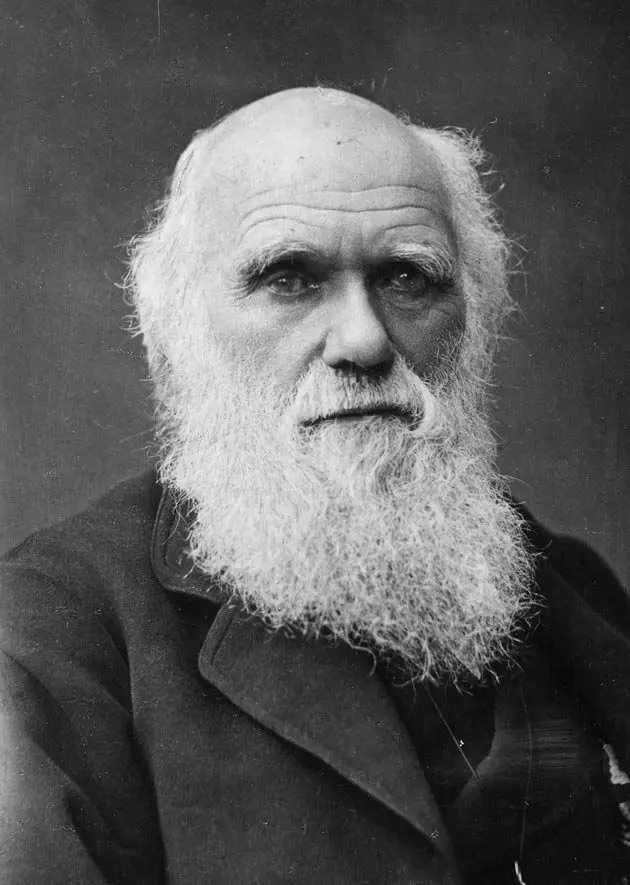
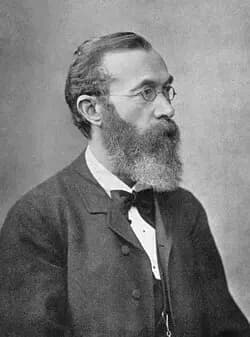
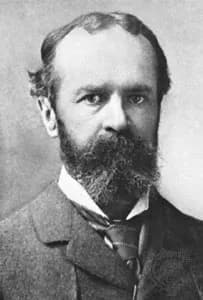
Meet the people who built Psychology.
Explore the authors, ideas and contributions that shaped the discipline.
Evolutiva
1859
Darwin
Evolutiva
Estructuralismo
1879
Wundt
Estructuralismo
Funcionalismo
1890
James
Funcionalismo
Psicoanálisis
1900
Freud
Psicoanálisis
Conductismo
1913
Watson
Conductismo
Sociocultural
1934
Vygotsky
Sociocultural
Psic. Social
1936
Lewin
Psic. Social
Conductismo
1948
Skinner
Conductismo
Desarrollo
1950
Erikson
Desarrollo
Psic. Social
1951
Asch
Psic. Social
Humanismo
1954
Maslow
Humanismo
Padre de la Teoría de la Atribución
1958
Heider
Padre de la Teoría de la Atribución
Cognitiva
1967
Neisser
Cognitiva
Autor principal del criterio de Consenso.
1967
Kelley
Autor principal del criterio de Consenso.
Cognitivo/Social
1977
Bandura
Cognitivo/Social
Cognitiva
1983
Gardner
Cognitiva
1859
Darwin
Evolutiva
1879
Wundt
Estructuralismo
1890
James
Funcionalismo
1900
Freud
Psicoanálisis
1913
Watson
Conductismo
1934
Vygotsky
Sociocultural
1936
Lewin
Psic. Social
1948
Skinner
Conductismo
1950
Erikson
Desarrollo
1951
Asch
Psic. Social
1954
Maslow
Humanismo
1958
Heider
Padre de la Teoría de la Atribución
1967
Neisser
Cognitiva
1967
Kelley
Autor principal del criterio de Consenso.
1977
Bandura
Cognitivo/Social
1983
Gardner
Cognitiva
← Desliza para ver más →
Every author, connected to your whole syllabus.
In the Campus authors aren't a list of names. Each one has a profile linked to the topics where they appear, their quotes and the authors they relate to.
Campus/Find them by hashtag
Example
Your education can keep growing with you.
The Campus will keep expanding its content to support you through the different stages of your Psychology education.
Degree in Psychology
1stAvailable
2ndAvailable
3rdPlanned
4thPlanned
Specialisation
Master's and specialisations
When a master's programme or specialisation is added, we'll announce its availability and price.
Planned
Stop studying by jumping between ten places.
Notes in one place.
Podcasts in another.
Quizzes on another page.
Exams saved in folders.
Doubts left unanswered.
All connected
Content
Resources
Practice
Exams
Progress
Calendar
Community
AI
Your studying can be organised in one place.
Everything you need to study, connected in one place.
Campus, scattered notes or searching on your own
Campus
Scattered notes
Searching on your own
Organised content
Yes
No
No
Resources per topic
Yes
Partly
No
Quizzes
Yes
No
Partly
Exams
Yes
No
No
Calendar
Yes
No
No
Progress tracking
Yes
No
No
Personalization
Yes
Partly
No
Community
Yes
No
No
All your Psychology studies. In one Campus.
Start studying inside the Campus.
Years 1 and 2 of the degree are currently available.
Your year's content organised by subject and topic and, inside every topic, its study resources. Plus quizzes, subject exams, an activity calendar, progress tracking, tools to personalise your studying and the student community. Brainy is included in the Pro Plus Plan.
How is the content organised?
By year, subject and topic. You pick your year, open a subject and go straight to the topic you want to study.
What resources does each topic have?
Each topic brings together its full content with summaries, outlines and infographics, concept maps, slides, a podcast, flashcards and quizzes, all linked to the same topic.
Are there quizzes?
Yes. You can practise with quizzes on every topic. The Pro Plan includes 1 weekly retake per quiz; Pro Plus gives unlimited retakes with detailed explanations.
Are there exams?
Yes. Every subject has its exam, covering the whole subject. The result is recorded in your progress.
How does progress tracking work?
You see the completion percentage of each year and subject, the topics you've done and your quiz and exam results.
What does the calendar record?
It automatically records your activity: completed topics, quizzes and exams, podcasts listened to, flashcards reviewed, notes and highlights. You can also plan sessions and exam dates and export it to Google or Apple Calendar.
Can I take my own notes?
Yes. You can write notes inside every topic and they're saved in your Campus.
Can I highlight?
Yes. You can highlight the content in different colours, bookmark it and draw on it.
Can I change the font?
Yes. You can choose the font and adjust the text size to read in the way that suits you best.
Can I share notes?
Yes. You can share your notes and files in the community chat.
Can I talk with other students?
Yes. The community is a degree chat inside the Campus, with threads, polls and file attachments.
Can I talk about a specific topic?
Yes. You can open threads about a topic and mention syllabus authors and resources so everyone knows what you're discussing.
Is Brainy built in?
Yes. Brainy is the AI assistant built into the Campus and is included in the Pro Plus Plan.
Which years are available?
Years 1 and 2 of the degree are currently available. We'll keep adding the next years.
What plans are there?
The Pro Plan, at €19.99/month with the two years currently available, and the Pro Plus Plan, with advanced features and Brainy. The plans page shows all prices, the annual option and how pricing will change as more years are added.
How does the subscription work?
You can subscribe with monthly or annual billing. Payment is secure through Paddle, you can cancel anytime from your account and cancelling stops future renewals.